










Among Us is a multiplayer social deduction game developed by InnerSloth LLC where players take on roles aboard a spaceship and compete through deception, task completion, and group voting. Sessions accommodate between four and fifteen players, creating variable group dynamics based on player count.
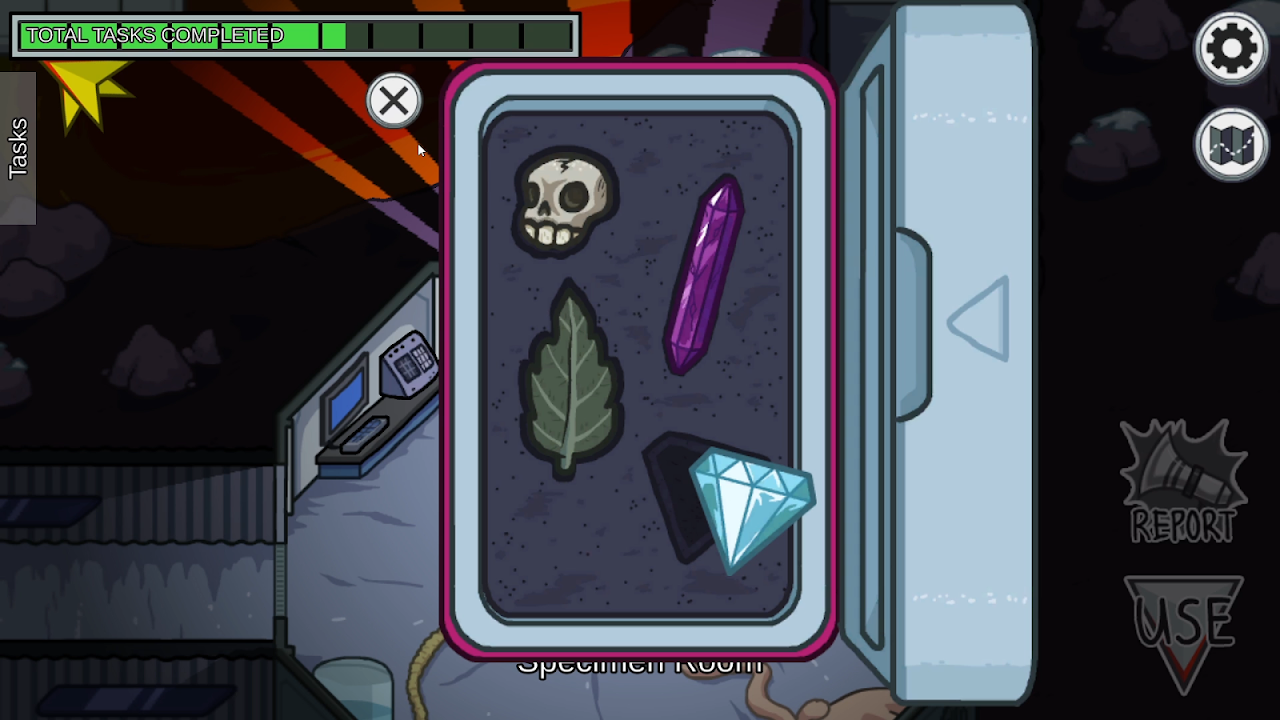
The game divides participants into two opposing roles with fundamentally different objectives. Most players are assigned as crewmates, whose primary goal is to complete a series of tasks that prepare the spaceship for departure while identifying and eliminating an impostor hidden among them. This dual responsibility creates constant tension between progress toward departure and the survival imperative of discovering which player is working against them.
The impostor faces an inverted objective structure, working to sabotage tasks that crewmates are attempting to complete while undermining the spaceship's preparation. Beyond sabotage, the impostor also attempts to eliminate crewmates without being discovered, adding danger that extends beyond task failure. The impostor must navigate the group while pursuing these covert objectives, requiring strategic decision-making about when and how to act without arousing suspicion.
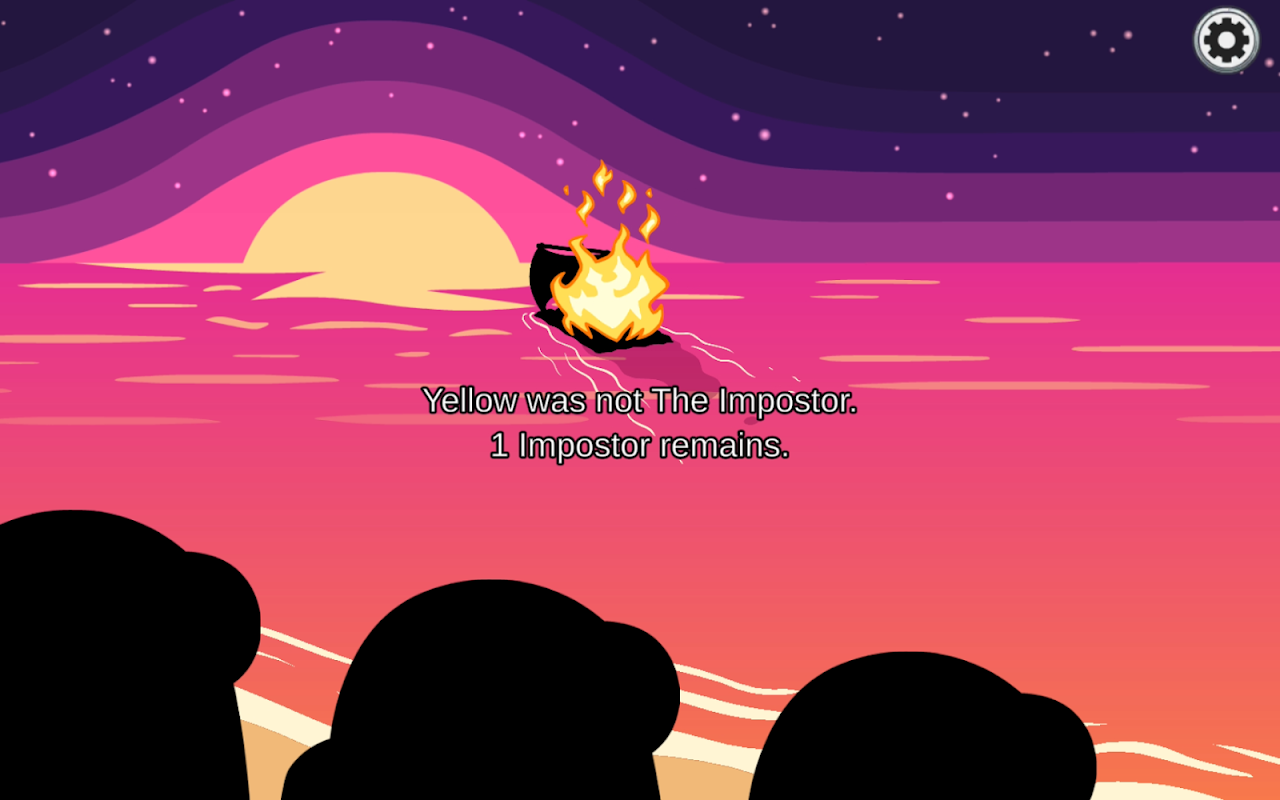
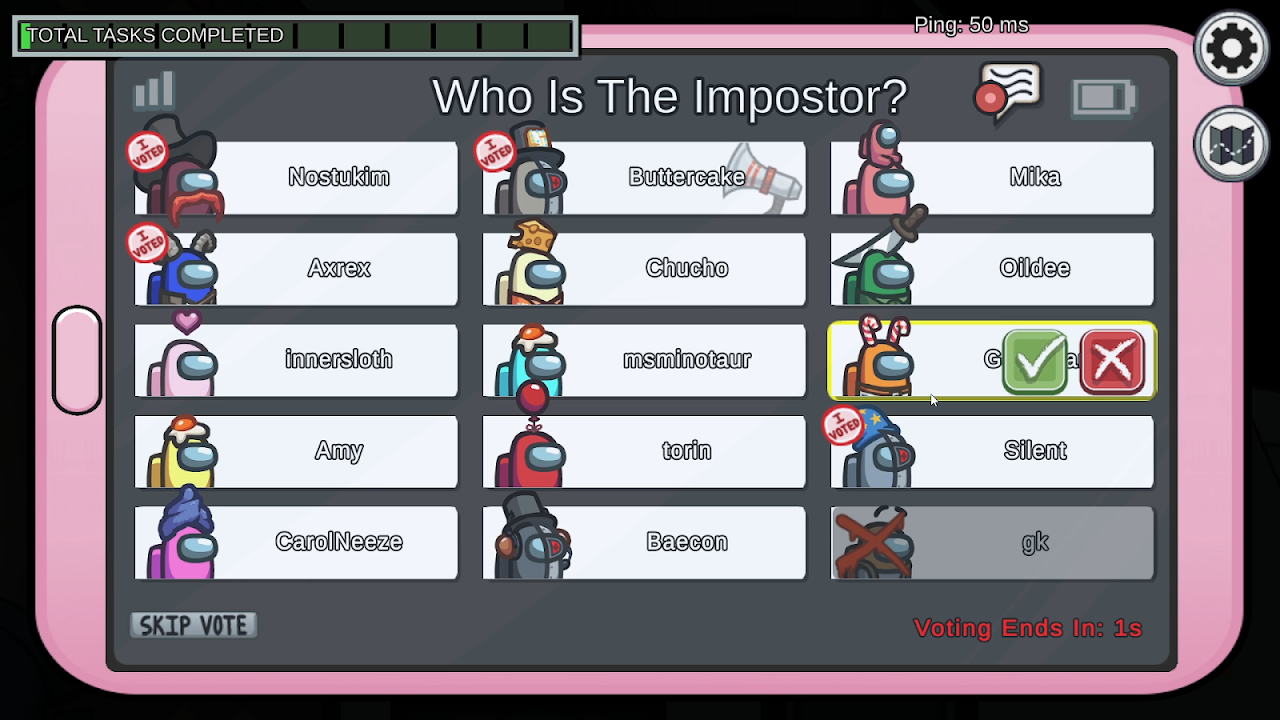
The voting mechanism serves as a central mechanic that bridges the role-based asymmetry. When suspicious behavior or a crewmate elimination is discovered, players collectively vote on who they believe the impostor to be. These votes determine whether suspected players are ejected from the game, directly affecting whether crewmates can succeed or the impostor consolidates power. The mechanism encourages discussion and negotiation, as players attempt to convince others of their position while concealing their true role and intentions.
Gameplay success depends on distinct skill sets for each role. Crewmates must balance task execution with observation and skepticism, learning to identify behavioral inconsistencies that suggest impostor activity. Impostors must develop social awareness and timing, deciding when to act covertly and how to maintain plausibility under scrutiny. The asymmetry between roles means that winning conditions are mutually exclusive. Crewmate victory requires identifying and eliminating the impostor, while impostor victory requires either eliminating enough crewmates or successfully sabotaging the ship's preparation.
The game supports multiplayer play across two connectivity modes. Sessions can be conducted entirely online, connecting players across distances without requiring proximity, or over a local WiFi network, enabling shared-device or local-network sessions where players in the same physical location compete together. This dual approach allows the game to function in both distributed and co-located social contexts.
The variable player range shapes the strategic experience significantly. Smaller groups of four or five players create intimate environments where each action carries higher weight and player familiarity may influence voting patterns. Larger sessions approaching the fifteen-player maximum introduce more complexity, as players have more potential suspects to evaluate and greater difficulty in tracking all behaviors and communications. Increased player count also affects how easily impostors can operate and how quickly sabotage spreads through the group.
Updates introduce new features and address bugs on an ongoing basis. The game requires Android 7.0 or higher and uses 51MB of storage, keeping it accessible across a broad device range while maintaining manageable installation requirements for users with limited storage.
The game divides participants into two opposing roles with fundamentally different objectives. Most players are assigned as crewmates, whose primary goal is to complete a series of tasks that prepare the spaceship for departure while identifying and eliminating an impostor hidden among them. This dual responsibility creates constant tension between progress toward departure and the survival imperative of discovering which player is working against them.
The impostor faces an inverted objective structure, working to sabotage tasks that crewmates are attempting to complete while undermining the spaceship's preparation. Beyond sabotage, the impostor also attempts to eliminate crewmates without being discovered, adding danger that extends beyond task failure. The impostor must navigate the group while pursuing these covert objectives, requiring strategic decision-making about when and how to act without arousing suspicion.
The voting mechanism serves as a central mechanic that bridges the role-based asymmetry. When suspicious behavior or a crewmate elimination is discovered, players collectively vote on who they believe the impostor to be. These votes determine whether suspected players are ejected from the game, directly affecting whether crewmates can succeed or the impostor consolidates power. The mechanism encourages discussion and negotiation, as players attempt to convince others of their position while concealing their true role and intentions.
Gameplay success depends on distinct skill sets for each role. Crewmates must balance task execution with observation and skepticism, learning to identify behavioral inconsistencies that suggest impostor activity. Impostors must develop social awareness and timing, deciding when to act covertly and how to maintain plausibility under scrutiny. The asymmetry between roles means that winning conditions are mutually exclusive. Crewmate victory requires identifying and eliminating the impostor, while impostor victory requires either eliminating enough crewmates or successfully sabotaging the ship's preparation.
The game supports multiplayer play across two connectivity modes. Sessions can be conducted entirely online, connecting players across distances without requiring proximity, or over a local WiFi network, enabling shared-device or local-network sessions where players in the same physical location compete together. This dual approach allows the game to function in both distributed and co-located social contexts.
The variable player range shapes the strategic experience significantly. Smaller groups of four or five players create intimate environments where each action carries higher weight and player familiarity may influence voting patterns. Larger sessions approaching the fifteen-player maximum introduce more complexity, as players have more potential suspects to evaluate and greater difficulty in tracking all behaviors and communications. Increased player count also affects how easily impostors can operate and how quickly sabotage spreads through the group.
Updates introduce new features and address bugs on an ongoing basis. The game requires Android 7.0 or higher and uses 51MB of storage, keeping it accessible across a broad device range while maintaining manageable installation requirements for users with limited storage.
No reviews found!









No comments found for this product. Be the first to comment!