









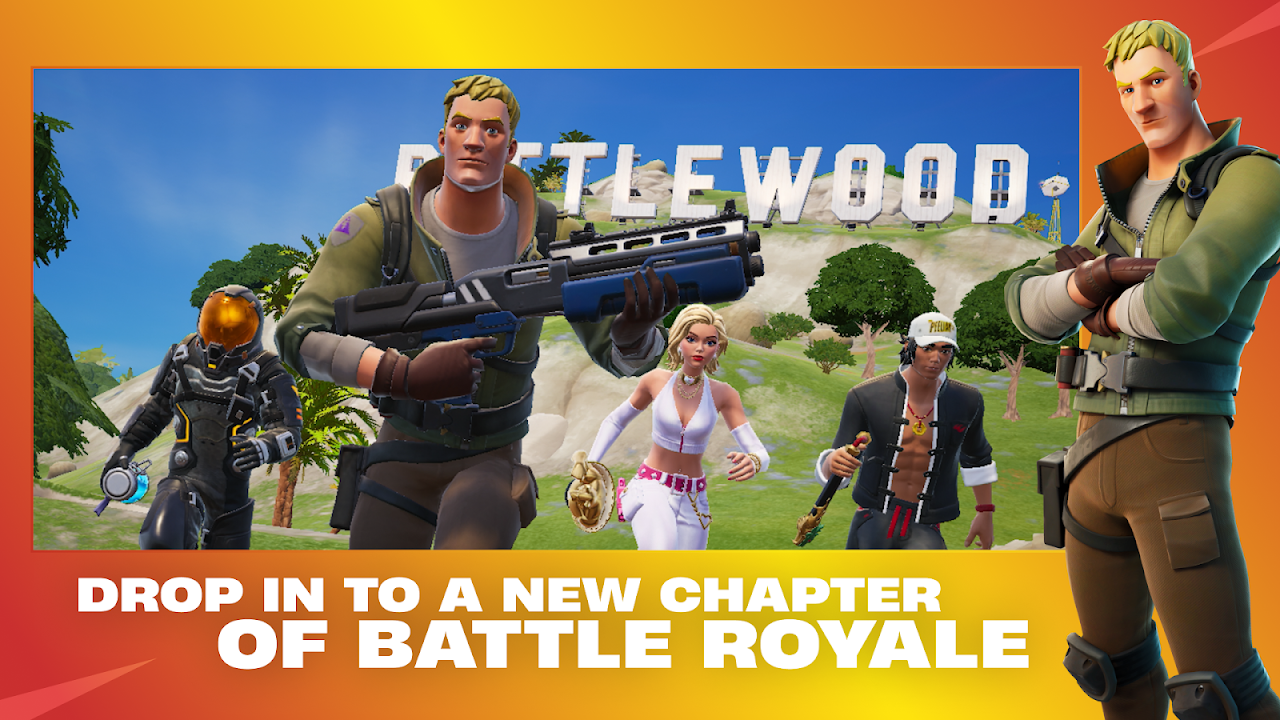
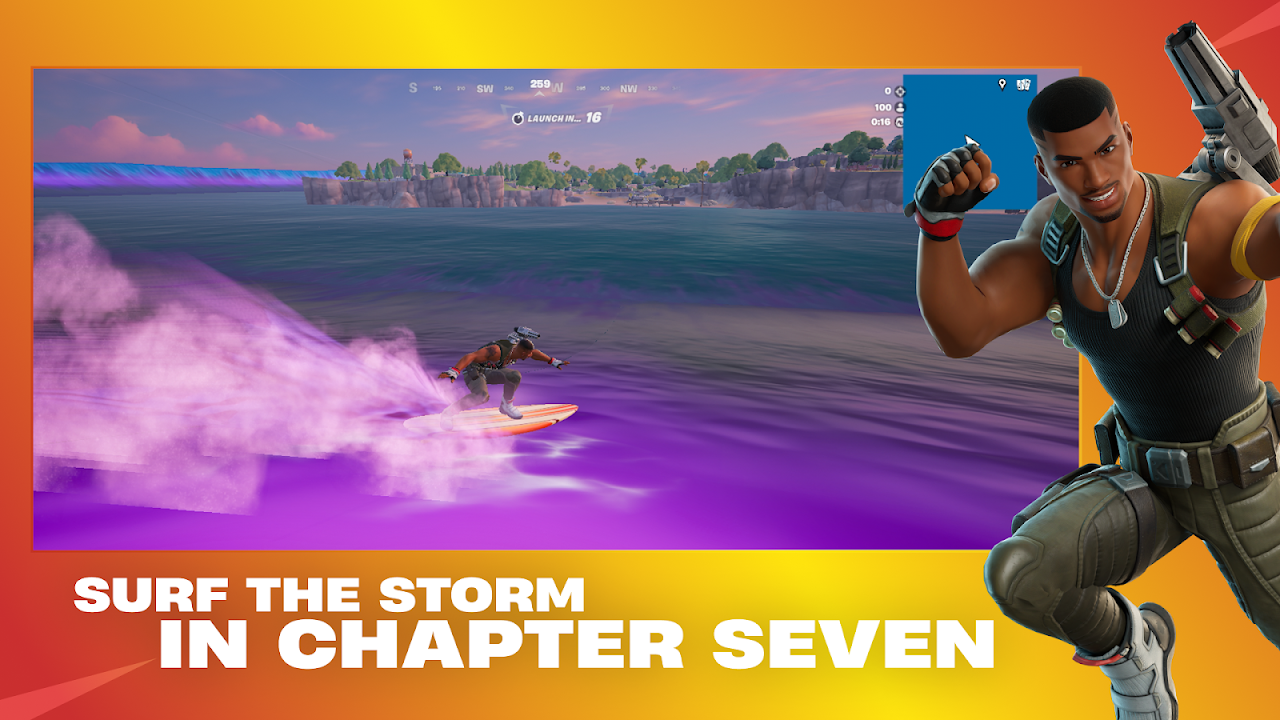
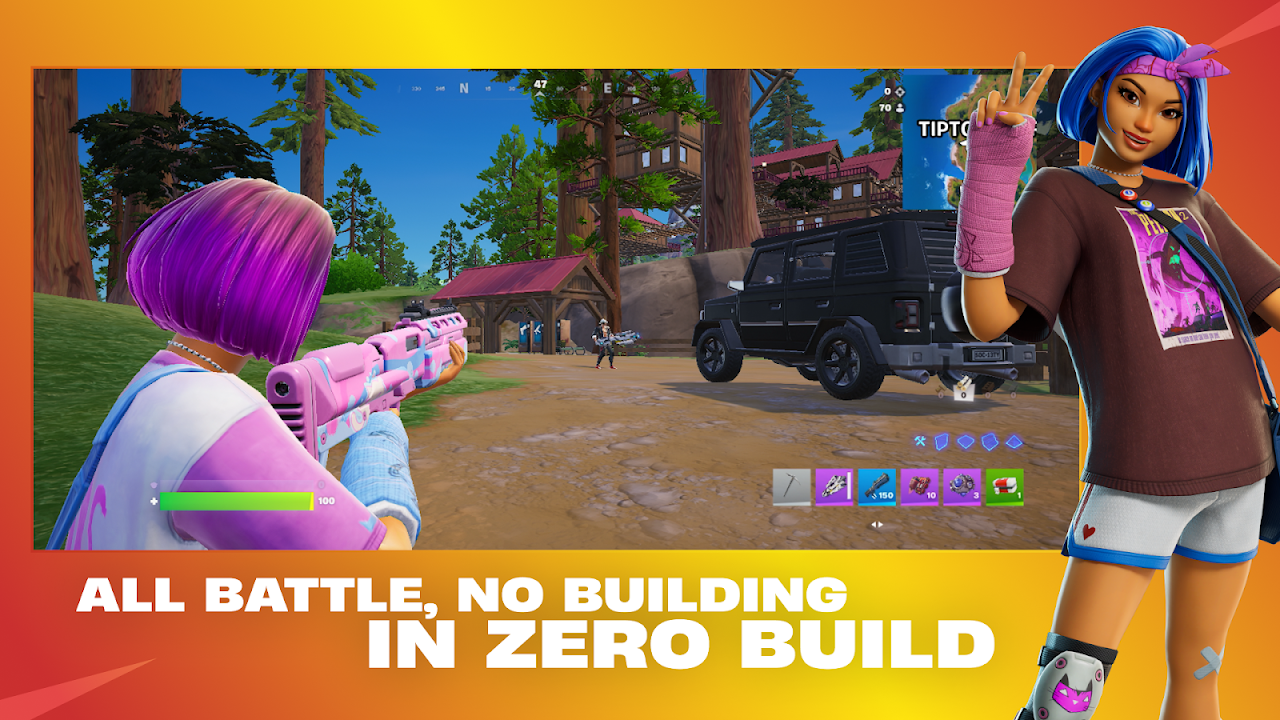
Fortnite is a battle royale game in which up to 100 players compete to be the last player or team standing. After jumping from a descending aircraft onto a large island, players must scavenge for weapons, eliminate opponents, and evade an expanding hazard zone that steadily shrinks the play area and forces encounters between remaining combatants.
The game offers several play modes suited to different group sizes and play preferences. Solo matches pit individual players against one another. Duos support two-player teams, while Squads accommodate four-player teams, enabling coordinated team tactics. Players can queue with random opponents or team up with friends, providing flexibility in how they approach each session.
Gathering supplies is fundamental to survival. A harvesting tool allows players to mine materials from the environment—wood, stone, and metal that serve as building resources. Loot crates distributed across the map contain weapons, shields, and consumable items such as healing potions and resource-restoring supplies. This early-game scavenging determines initial combat readiness, and players who fail to locate equipment face steep disadvantages in firefights against better-equipped opponents.
Building distinguishes Fortnite from conventional shooters. During combat, players construct walls, floors, stairs, and roofs to create temporary defensive structures or mobility pathways. These constructions are destructible and have limited durability, making them tactical tools rather than permanent obstacles. Experienced players leverage building to gain high ground, create cover during engagements, and navigate terrain quickly. The mechanic requires spatial reasoning and practiced timing, establishing a skill gap between casual and dedicated players who invest time in mastering vertical construction.
Character progression advances through a leveling system. Players earn experience through matches and completed objectives, unlocking cosmetic rewards such as character outfits, emotes, and weapon skins. A customizable harvesting tool and glider can be personalized with these cosmetics, allowing players to express individual style. Additional cosmetic items are available through an in-app store for direct purchase, independent of progression-based unlocks, enabling players to acquire specific appearances without extended grinding.
Creative Mode extends the game beyond competitive play by offering sandbox tools for custom map design and game creation. This mode appeals to players interested in building without combat pressure or time constraints. Regularly scheduled in-game events introduce time-limited gameplay scenarios with altered rules or narrative contexts that deviate from standard matches. Weekly challenges provide recurring objectives that reward cosmetics and progression, incentivizing consistent engagement throughout seasons.
Fortnite is accessible on Android, PlayStation 4, Xbox One, PC, Mac, and Nintendo Switch. Cross-platform play enables competition and cooperation across these systems, uniting the player base. Players on any device can queue into matches with players on others without restriction, though performance and control schemes vary by platform and hardware capabilities.
Audio design provides auditory feedback for gunfire, building actions, and environmental interactions, reinforcing situational awareness during matches. The application runs on Unreal Engine, processing these audio cues and visual elements to maintain responsive gameplay. Since its 2017 launch, Fortnite has received seasonal content updates and mechanical refinements that introduce new map locations, weapons, and gameplay systems, maintaining fresh content and continuously evolving the competitive environment.
The game offers several play modes suited to different group sizes and play preferences. Solo matches pit individual players against one another. Duos support two-player teams, while Squads accommodate four-player teams, enabling coordinated team tactics. Players can queue with random opponents or team up with friends, providing flexibility in how they approach each session.
Gathering supplies is fundamental to survival. A harvesting tool allows players to mine materials from the environment—wood, stone, and metal that serve as building resources. Loot crates distributed across the map contain weapons, shields, and consumable items such as healing potions and resource-restoring supplies. This early-game scavenging determines initial combat readiness, and players who fail to locate equipment face steep disadvantages in firefights against better-equipped opponents.
Building distinguishes Fortnite from conventional shooters. During combat, players construct walls, floors, stairs, and roofs to create temporary defensive structures or mobility pathways. These constructions are destructible and have limited durability, making them tactical tools rather than permanent obstacles. Experienced players leverage building to gain high ground, create cover during engagements, and navigate terrain quickly. The mechanic requires spatial reasoning and practiced timing, establishing a skill gap between casual and dedicated players who invest time in mastering vertical construction.
Character progression advances through a leveling system. Players earn experience through matches and completed objectives, unlocking cosmetic rewards such as character outfits, emotes, and weapon skins. A customizable harvesting tool and glider can be personalized with these cosmetics, allowing players to express individual style. Additional cosmetic items are available through an in-app store for direct purchase, independent of progression-based unlocks, enabling players to acquire specific appearances without extended grinding.
Creative Mode extends the game beyond competitive play by offering sandbox tools for custom map design and game creation. This mode appeals to players interested in building without combat pressure or time constraints. Regularly scheduled in-game events introduce time-limited gameplay scenarios with altered rules or narrative contexts that deviate from standard matches. Weekly challenges provide recurring objectives that reward cosmetics and progression, incentivizing consistent engagement throughout seasons.
Fortnite is accessible on Android, PlayStation 4, Xbox One, PC, Mac, and Nintendo Switch. Cross-platform play enables competition and cooperation across these systems, uniting the player base. Players on any device can queue into matches with players on others without restriction, though performance and control schemes vary by platform and hardware capabilities.
Audio design provides auditory feedback for gunfire, building actions, and environmental interactions, reinforcing situational awareness during matches. The application runs on Unreal Engine, processing these audio cues and visual elements to maintain responsive gameplay. Since its 2017 launch, Fortnite has received seasonal content updates and mechanical refinements that introduce new map locations, weapons, and gameplay systems, maintaining fresh content and continuously evolving the competitive environment.
No reviews found!




No comments found for this product. Be the first to comment!