











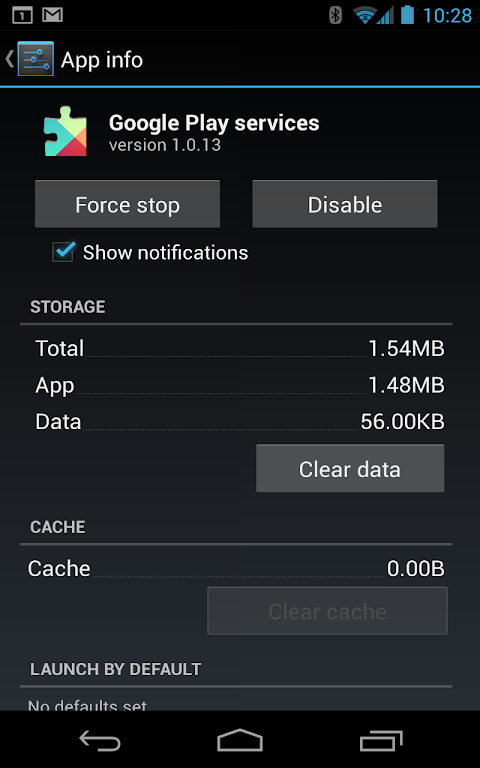

Google Play services is a background service framework that enables Google apps and other applications to deliver core functionality to Android users. Rather than being a visible application with its own interface, Google Play services operates silently in the background, providing the essential infrastructure that many modern Android applications depend on to function properly. The framework is responsible for delivering updates to Google apps and other applications, distributing patches, security fixes, and new features without requiring users to manually navigate to an app store and initiate downloads.
One of the framework's primary responsibilities is providing authentication to Google services. When a user wants to access their Google account within any application, Google Play services handles the authentication process securely. Rather than requiring each app to implement its own login system for Google accounts, a centralized mechanism provides unified authentication for all applications. When applications request access to the user's Google account, the framework manages the entire authentication flow, generating and handling tokens as needed. This approach improves security by concentrating credential handling in a single location, reducing where passwords must be stored and entered, and letting users revoke app access without changing their password. Google can also push security improvements to the authentication system without waiting for individual apps to update.
A second core capability is contact synchronization, which keeps address book data current across a user's devices. Google Play services enables users to synchronize their device's contact list with their Google account, creating a backup of contact information on Google's servers. This synchronization operates bidirectionally—changes made to contacts on the phone are reflected in the Google account, and new contacts added elsewhere are pulled back to the phone. This ensures that a user's address book remains synchronized across all devices and is protected against data loss from device damage, loss, or replacement.
Location-based services are another essential component. Google Play services collects location data from GPS, cellular networks, and Wi-Fi positioning, then distributes it to apps with appropriate permissions. Users can manage location data through privacy settings—granting or denying access per app, adjusting collection frequency, and controlling which applications can access the data.
Maps functionality is directly integrated into Google Play services, enabling applications to display interactive maps, provide navigation, and offer location-aware features without each app needing to independently develop mapping systems. Applications can leverage the mapping infrastructure provided through Google Play services rather than bundling their own mapping engines.
Offline search is a valuable capability that extends functionality when network connectivity is unavailable. The framework enables applications to query and display information using cached local data, providing search results and location features in areas with poor coverage or when users intentionally disable mobile data to preserve battery life or manage data consumption. This offline functionality ensures that users retain access to essential search and location features regardless of their current connectivity status.
One of the framework's primary responsibilities is providing authentication to Google services. When a user wants to access their Google account within any application, Google Play services handles the authentication process securely. Rather than requiring each app to implement its own login system for Google accounts, a centralized mechanism provides unified authentication for all applications. When applications request access to the user's Google account, the framework manages the entire authentication flow, generating and handling tokens as needed. This approach improves security by concentrating credential handling in a single location, reducing where passwords must be stored and entered, and letting users revoke app access without changing their password. Google can also push security improvements to the authentication system without waiting for individual apps to update.
A second core capability is contact synchronization, which keeps address book data current across a user's devices. Google Play services enables users to synchronize their device's contact list with their Google account, creating a backup of contact information on Google's servers. This synchronization operates bidirectionally—changes made to contacts on the phone are reflected in the Google account, and new contacts added elsewhere are pulled back to the phone. This ensures that a user's address book remains synchronized across all devices and is protected against data loss from device damage, loss, or replacement.
Location-based services are another essential component. Google Play services collects location data from GPS, cellular networks, and Wi-Fi positioning, then distributes it to apps with appropriate permissions. Users can manage location data through privacy settings—granting or denying access per app, adjusting collection frequency, and controlling which applications can access the data.
Maps functionality is directly integrated into Google Play services, enabling applications to display interactive maps, provide navigation, and offer location-aware features without each app needing to independently develop mapping systems. Applications can leverage the mapping infrastructure provided through Google Play services rather than bundling their own mapping engines.
Offline search is a valuable capability that extends functionality when network connectivity is unavailable. The framework enables applications to query and display information using cached local data, providing search results and location features in areas with poor coverage or when users intentionally disable mobile data to preserve battery life or manage data consumption. This offline functionality ensures that users retain access to essential search and location features regardless of their current connectivity status.
No reviews found!







No comments found for this product. Be the first to comment!