

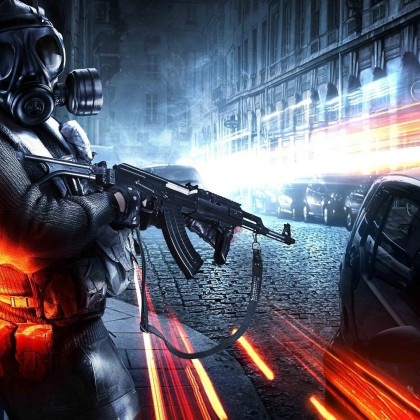










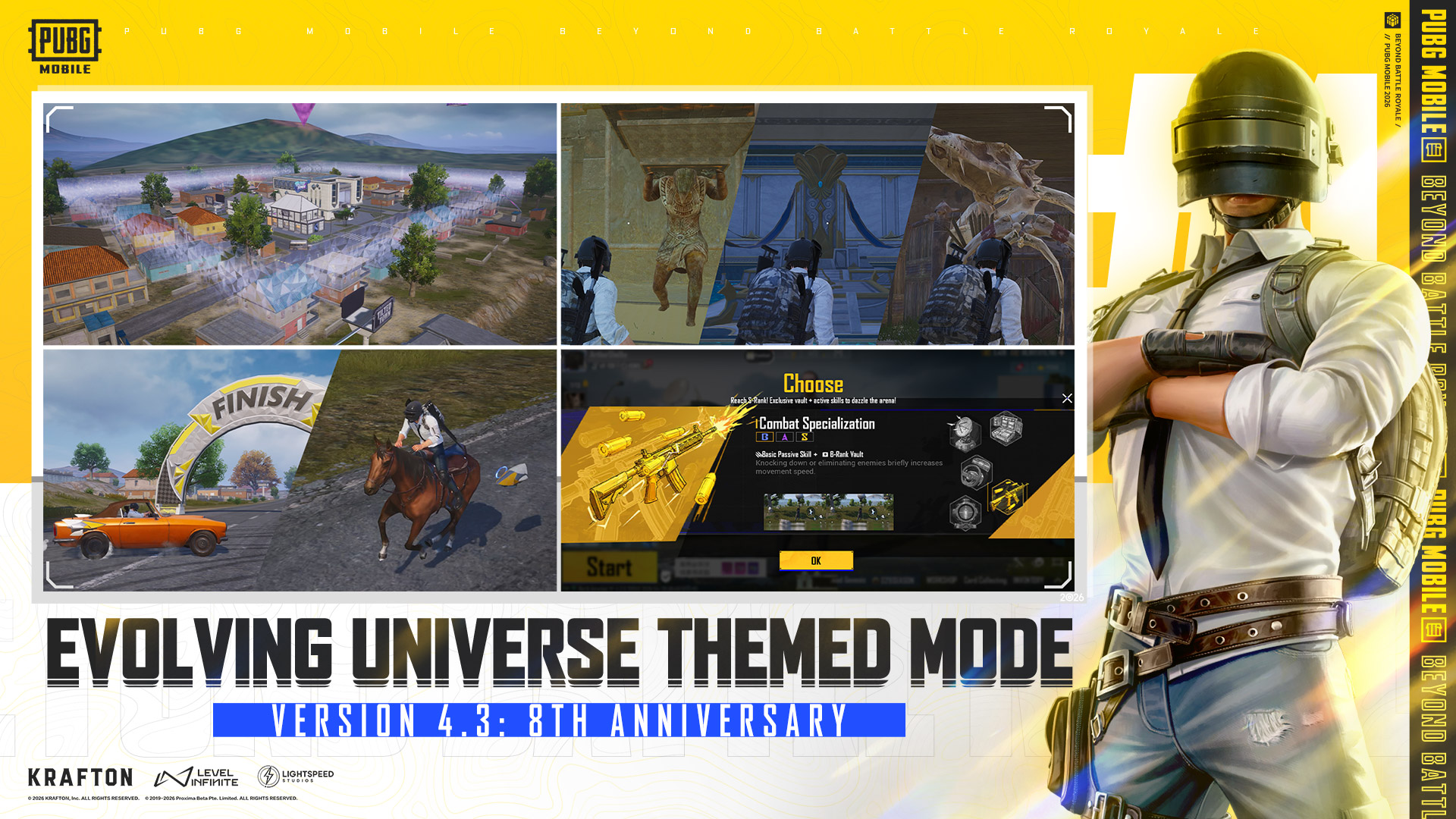
PUBG MOBILE is a free-to-play multiplayer action shooter built on Unreal Engine 4 that organizes gameplay around 100-player battle royale matches where teams compete for victory. The core experience places players on maps to scavenge resources, engage in combat, and outlast opponents, though the game extends beyond traditional royale formats through multiple specialized game modes targeting different playstyles.
The primary battle royale mode operates across five maps: Erangel, Sanhok, Miramar, Vikendi, and Livik. Each map features distinct geography, point-of-interest layouts, and environmental characteristics unique to that region. Terrain on these maps evolves between seasonal updates, altering loot spawn locations and creating new tactical pathways. Dynamic weather systems alter visibility and audio behavior throughout matches, changing how sound travels and what players can observe. Night battles introduce darkness that restricts visibility and requires engagement tactics adapted to low-light conditions. Players can approach matches as solo competitors, in duos, or within squads of up to four members. Real-time voice chat enables squad-based communication, allowing players to share tactical information, call out enemy positions, and coordinate movements across map distances.
PUBG MOBILE expands its gameplay scope beyond the core royale experience with multiple alternative modes. Payload provides team-oriented objectives distinct from survival mechanics, 4v4 Team Deathmatch restricts matches to rapid-fire twelve-player formats, Metro Royale scales the royale concept down to smaller player counts, Arcade offers accelerated rounds with modified ruleset options, Domination emphasizes territory control and objective capture, Mecha Fusion introduces heavily-armored unit combat scenarios, and Ignition provides additional tactical variants. This mode diversity accommodates varying play session lengths and playstyle preferences, enabling players to practice specific skills or engage with more structured competitive formats outside traditional royale rounds.
Combat systems emphasize both weapon proficiency and tactical positioning. Available weapons include assault rifles, sniper rifles, shotguns, and melee items. Each weapon features individual recoil patterns that demand player practice to control effectively during engagements. An attachment system allows extensive weapon customization with scopes, grips, magazines, and other modular components that modify accuracy, handling characteristics, and effective damage ranges. Transportation across maps utilizes motorcycles, trucks, armored cars, and helicopters with specific spawn locations. These vehicles create early-game strategic decisions around map positioning and looting efficiency.
The visual presentation employs HD graphics with realistic lighting effects and detailed character animations conveying movement and action responses during combat. The audio design uses 3D sound positioning to enable players to locate gunfire, footsteps, equipment usage, and vehicle movements through spatial audio alone. This audio-visual combination creates environmental awareness and tactical positioning information independent of direct visual observation.
Cosmetics enable appearance personalization, while gear configuration enables loadout modification. These cosmetics connect to seasonal content and thematic updates released on defined schedules. PUBG MOBILE operates on a seasonal schedule with regular patches, balance adjustments, and new content cycles. Collaborations with external properties periodically introduce branded cosmetics and event content into seasonal rotation.
Time-limited rewards structure engagement around seasonal cycles through battle pass systems offering cosmetics, weapon blueprints, and in-game currency tied to seasonal milestones. These progression systems combine cosmetic collection with gameplay incentives, creating long-term engagement aligned with seasonal schedules.
Within night battles, reduced visibility forces closer engagement ranges and increases the importance of audio localization, as 3D sound positioning becomes the primary information source for detecting distant threats. Dynamic weather systems create variable conditions across consecutive matches on identical maps—rain affects movement audio propagation and visibility while clear conditions provide enhanced audio clarity for detecting distant engagements. These environmental variables generate meaningful tactical variety, requiring players to adapt strategies between consecutive matches.
The primary battle royale mode operates across five maps: Erangel, Sanhok, Miramar, Vikendi, and Livik. Each map features distinct geography, point-of-interest layouts, and environmental characteristics unique to that region. Terrain on these maps evolves between seasonal updates, altering loot spawn locations and creating new tactical pathways. Dynamic weather systems alter visibility and audio behavior throughout matches, changing how sound travels and what players can observe. Night battles introduce darkness that restricts visibility and requires engagement tactics adapted to low-light conditions. Players can approach matches as solo competitors, in duos, or within squads of up to four members. Real-time voice chat enables squad-based communication, allowing players to share tactical information, call out enemy positions, and coordinate movements across map distances.
PUBG MOBILE expands its gameplay scope beyond the core royale experience with multiple alternative modes. Payload provides team-oriented objectives distinct from survival mechanics, 4v4 Team Deathmatch restricts matches to rapid-fire twelve-player formats, Metro Royale scales the royale concept down to smaller player counts, Arcade offers accelerated rounds with modified ruleset options, Domination emphasizes territory control and objective capture, Mecha Fusion introduces heavily-armored unit combat scenarios, and Ignition provides additional tactical variants. This mode diversity accommodates varying play session lengths and playstyle preferences, enabling players to practice specific skills or engage with more structured competitive formats outside traditional royale rounds.
Combat systems emphasize both weapon proficiency and tactical positioning. Available weapons include assault rifles, sniper rifles, shotguns, and melee items. Each weapon features individual recoil patterns that demand player practice to control effectively during engagements. An attachment system allows extensive weapon customization with scopes, grips, magazines, and other modular components that modify accuracy, handling characteristics, and effective damage ranges. Transportation across maps utilizes motorcycles, trucks, armored cars, and helicopters with specific spawn locations. These vehicles create early-game strategic decisions around map positioning and looting efficiency.
The visual presentation employs HD graphics with realistic lighting effects and detailed character animations conveying movement and action responses during combat. The audio design uses 3D sound positioning to enable players to locate gunfire, footsteps, equipment usage, and vehicle movements through spatial audio alone. This audio-visual combination creates environmental awareness and tactical positioning information independent of direct visual observation.
Cosmetics enable appearance personalization, while gear configuration enables loadout modification. These cosmetics connect to seasonal content and thematic updates released on defined schedules. PUBG MOBILE operates on a seasonal schedule with regular patches, balance adjustments, and new content cycles. Collaborations with external properties periodically introduce branded cosmetics and event content into seasonal rotation.
Time-limited rewards structure engagement around seasonal cycles through battle pass systems offering cosmetics, weapon blueprints, and in-game currency tied to seasonal milestones. These progression systems combine cosmetic collection with gameplay incentives, creating long-term engagement aligned with seasonal schedules.
Within night battles, reduced visibility forces closer engagement ranges and increases the importance of audio localization, as 3D sound positioning becomes the primary information source for detecting distant threats. Dynamic weather systems create variable conditions across consecutive matches on identical maps—rain affects movement audio propagation and visibility while clear conditions provide enhanced audio clarity for detecting distant engagements. These environmental variables generate meaningful tactical variety, requiring players to adapt strategies between consecutive matches.
No reviews found!






No comments found for this product. Be the first to comment!