








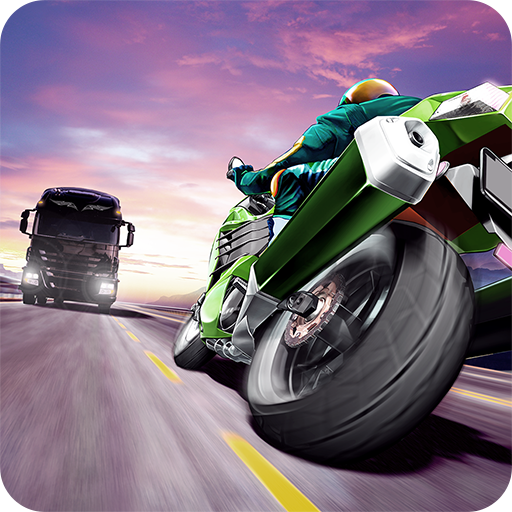
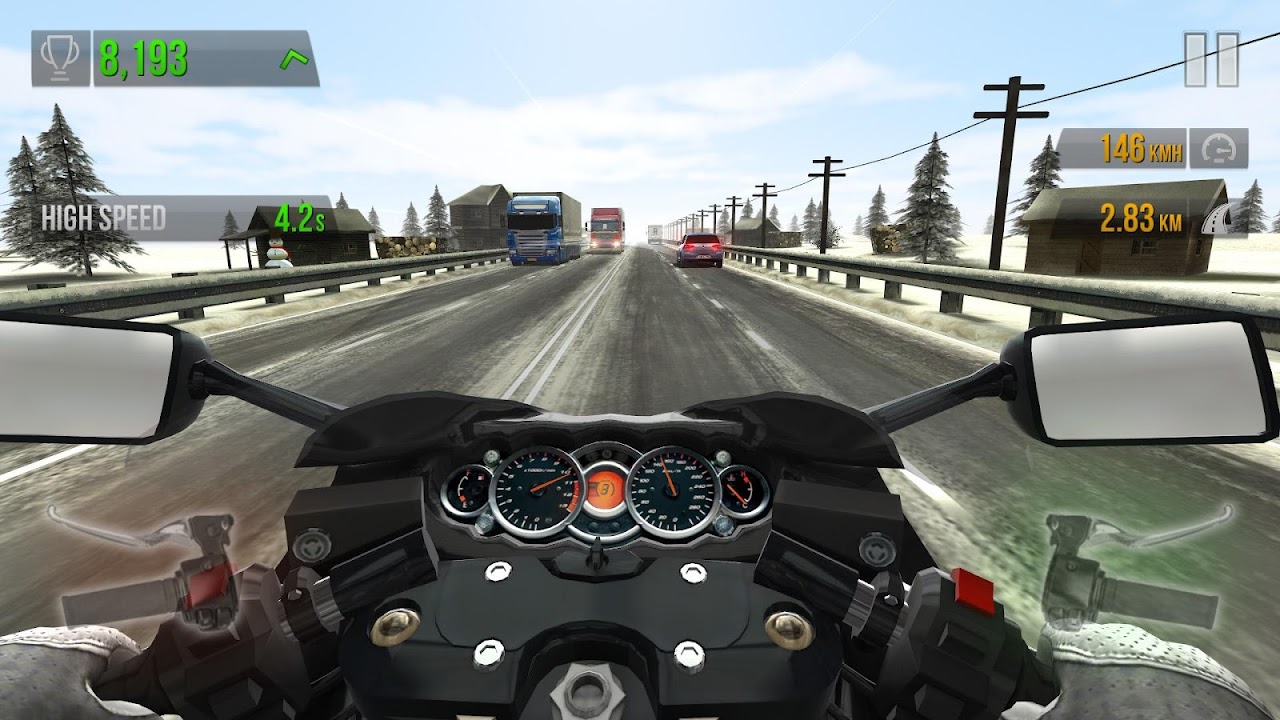
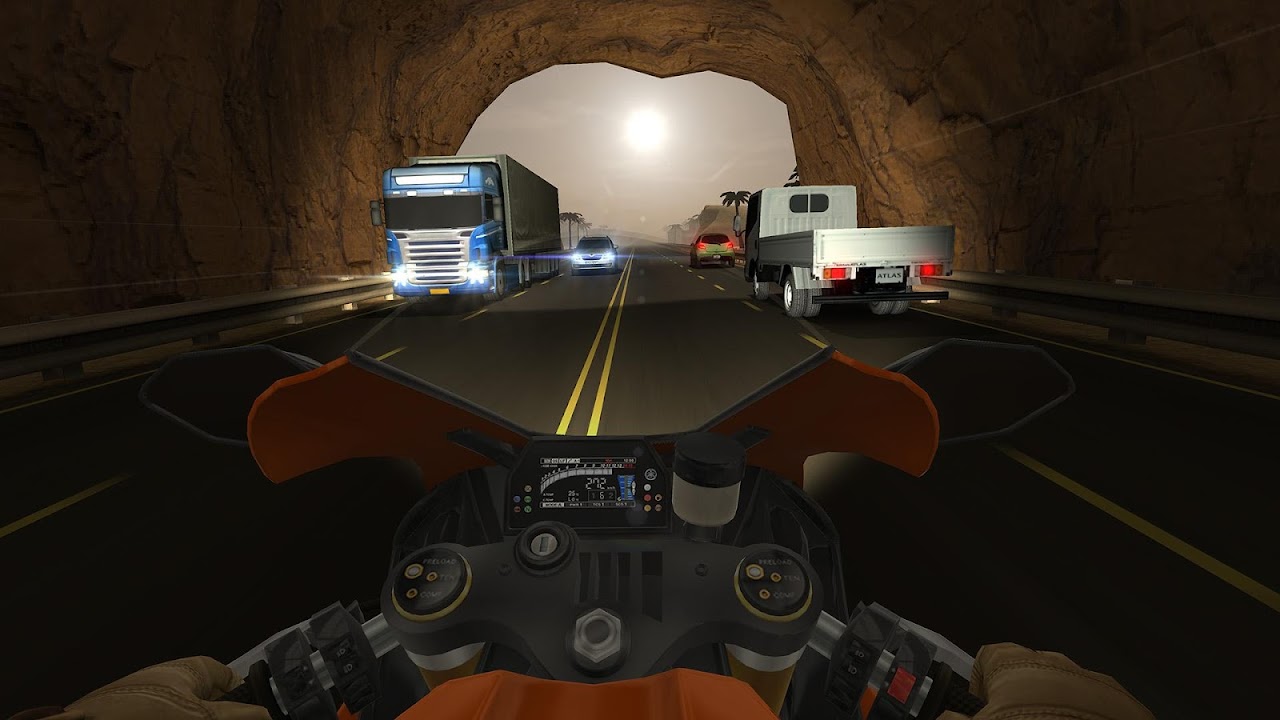
Traffic Rider is a motorbike racing game that emphasizes high-speed overtaking and arcade-style driving mechanics. Developed by the creators of Traffic Racer, it brings their traffic-based racing expertise to a motorcycle-focused experience. Players navigate through traffic in a first-person camera view, competing in an endless racing environment without lap timers or fuel constraints.
The core mechanic revolves around weaving through vehicle traffic at increasing speeds. Players can overtake traffic vehicles, perform wheelies, and engage in risky driving to accumulate bonus points. The game rewards aggressive riding through a multi-layered scoring system. Standard racing generates points, but bonus mechanics encourage higher-risk play: high-speed riding grants bonus scores, close-proximity overtaking of traffic above 100 km/h awards both bonus scores and cash rewards, and driving in the opposite direction on two-way roads provides additional points and currency. This reward structure incentivizes increasingly bold maneuvers rather than safe, steady progression.
Career mode structures the game around 90-plus missions, offering directed challenges within the broader endless racing framework. These missions provide specific objectives that guide progression, though the underlying gameplay remains focused on continuous high-speed driving and traffic navigation. Completing missions and accumulating scores advance the player through the career path while building in-game wealth.
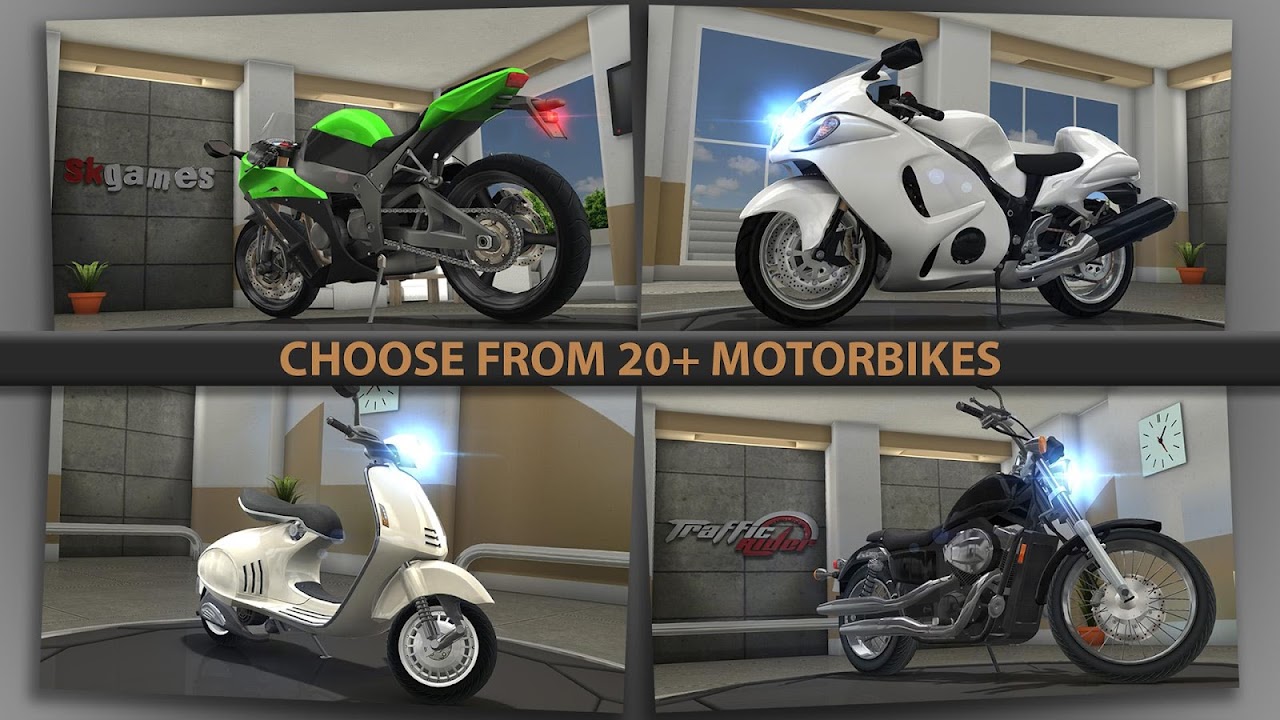
The motorcycle selection emphasizes authentic variety. Players can choose from 34 motorbikes, each with distinct handling characteristics and performance attributes. As players progress and earn in-game currency, they can upgrade their current motorcycle or purchase new bikes entirely. This progression system creates a traditional gameplay loop of earning currency through successful racing and spending it on mechanical improvements and new vehicles.
The game incorporates authentic motorcycle audio. Sounds recorded from real bikes are integrated throughout the game, providing audio feedback that changes based on engine type and throttle input. This attention to audio extends the experience beyond visual gameplay mechanics, creating a more immersive sensory experience.
Environmental design incorporates detailed roadways and traffic scenarios that shift between day and night variations. These environmental changes affect visibility and appearance, functioning primarily as aesthetic variations that provide context for the high-speed racing action.
Achievement tracking provides a secondary progression system alongside the career missions. The game includes 30-plus achievements, which typically reward players for accomplishments such as reaching certain speeds, performing specific maneuvers, or completing challenge variations within the racing scenarios.
Online leaderboards enable competitive comparison with other players, tracking high scores and distances from racing sessions. This asynchronous multiplayer element adds longevity to the core gameplay loop without requiring real-time interaction.
Localization support extends to 19 languages, making the interface accessible across a broad range of regions and player bases.
The absence of fuel mechanics or strict time limits creates a gameplay rhythm focused entirely on continuous racing and risk management. Players make moment-to-moment decisions about when to overtake traffic and whether to perform high-risk maneuvers for bonus points. This design choice distinguishes Traffic Rider from racing games that incorporate resource management or time pressure, resulting in a sandbox-like racing experience where the primary pressure comes from self-imposed speed targets and leaderboard competition. Gameplay sessions can continue indefinitely until the player chooses to stop, with progression coming from accumulated scores and completed career missions rather than level completions or set endpoints.
The core mechanic revolves around weaving through vehicle traffic at increasing speeds. Players can overtake traffic vehicles, perform wheelies, and engage in risky driving to accumulate bonus points. The game rewards aggressive riding through a multi-layered scoring system. Standard racing generates points, but bonus mechanics encourage higher-risk play: high-speed riding grants bonus scores, close-proximity overtaking of traffic above 100 km/h awards both bonus scores and cash rewards, and driving in the opposite direction on two-way roads provides additional points and currency. This reward structure incentivizes increasingly bold maneuvers rather than safe, steady progression.
Career mode structures the game around 90-plus missions, offering directed challenges within the broader endless racing framework. These missions provide specific objectives that guide progression, though the underlying gameplay remains focused on continuous high-speed driving and traffic navigation. Completing missions and accumulating scores advance the player through the career path while building in-game wealth.
The motorcycle selection emphasizes authentic variety. Players can choose from 34 motorbikes, each with distinct handling characteristics and performance attributes. As players progress and earn in-game currency, they can upgrade their current motorcycle or purchase new bikes entirely. This progression system creates a traditional gameplay loop of earning currency through successful racing and spending it on mechanical improvements and new vehicles.
The game incorporates authentic motorcycle audio. Sounds recorded from real bikes are integrated throughout the game, providing audio feedback that changes based on engine type and throttle input. This attention to audio extends the experience beyond visual gameplay mechanics, creating a more immersive sensory experience.
Environmental design incorporates detailed roadways and traffic scenarios that shift between day and night variations. These environmental changes affect visibility and appearance, functioning primarily as aesthetic variations that provide context for the high-speed racing action.
Achievement tracking provides a secondary progression system alongside the career missions. The game includes 30-plus achievements, which typically reward players for accomplishments such as reaching certain speeds, performing specific maneuvers, or completing challenge variations within the racing scenarios.
Online leaderboards enable competitive comparison with other players, tracking high scores and distances from racing sessions. This asynchronous multiplayer element adds longevity to the core gameplay loop without requiring real-time interaction.
Localization support extends to 19 languages, making the interface accessible across a broad range of regions and player bases.
The absence of fuel mechanics or strict time limits creates a gameplay rhythm focused entirely on continuous racing and risk management. Players make moment-to-moment decisions about when to overtake traffic and whether to perform high-risk maneuvers for bonus points. This design choice distinguishes Traffic Rider from racing games that incorporate resource management or time pressure, resulting in a sandbox-like racing experience where the primary pressure comes from self-imposed speed targets and leaderboard competition. Gameplay sessions can continue indefinitely until the player chooses to stop, with progression coming from accumulated scores and completed career missions rather than level completions or set endpoints.
No reviews found!






No comments found for this product. Be the first to comment!